
News
Analysis of the situation from the NGO perspective
28.08.2026
Following the 5 August meeting between non-governmental organisations (NGOs) and Prime Minister Andris Kulbergs, held as an open session where the State Chancellery, Ministry of Culture and Ministry of Finance presented information on NGO funding, much of the attention focused on the content of the presentations. They highlighted a significant problem – Latvia still lacks a unified, transparent and reliable system for tracking public funding.
The day before, the NGO representatives of the Council for the Implementation of the Memorandum of Cooperation between Non-Governmental Organisations and the Cabinet of Ministers had submitted a proposal to the Cabinet of Ministers to improve this system. However, the proposal was not discussed during the meeting. The proposal is available here.
This means that public administration itself is unable to fully track and analyse how public funding is distributed. There is also a lack of centralised and comparable data on the NGO sector. Although NGOs receive most of their funding through open calls organised by sectoral ministries and their subordinate institutions, information on allocated funding is fragmented, spread across different databases and not suitable for comprehensive analysis.
This problem is not limited to NGOs. Information on state support for businesses, grants and other forms of public funding is also not consolidated into a single system. Until such a system exists, discussions about the amount and distribution of funding will continue to be based on assumptions and incomplete data rather than facts.
This makes it more difficult for the public to gain a comprehensive understanding of how public funds are distributed and prevents informed, data-based discussion about the allocation of state funding across different sectors.
Associations and foundations are highly diverse – they operate in the social sector, culture, sports, education, human rights protection, security and many other fields. At the same time, all organisations applying for public funding should be subject to the same clear and rigorous requirements.
When participating in calls organised by public administration, organisations are subject to clearly defined application, evaluation and funding-allocation criteria. This means that the procedures governing the receipt and use of funding are determined by the terms of the call, Cabinet regulations and other applicable legislation, leaving no room for action outside the established regulatory framework.
In addition, every organisation involved in financial activities is required to prepare and submit an annual report detailing its income and expenditure. Depending on the scale of an organisation’s activities, legislation may also require the involvement of an independent auditor or sworn auditor to ensure financial transparency and compliance with established requirements.
Therefore, the discussion about public funding is not merely a question of the activities of individual organisations. It highlights the need to establish, at the national level, a unified, clear and accessible system that would make it possible to accurately track the flow of public funding, strengthen public trust and promote fact-based discussion.
Dalies:


Saistītas ziņas

News
News
06.10.2026
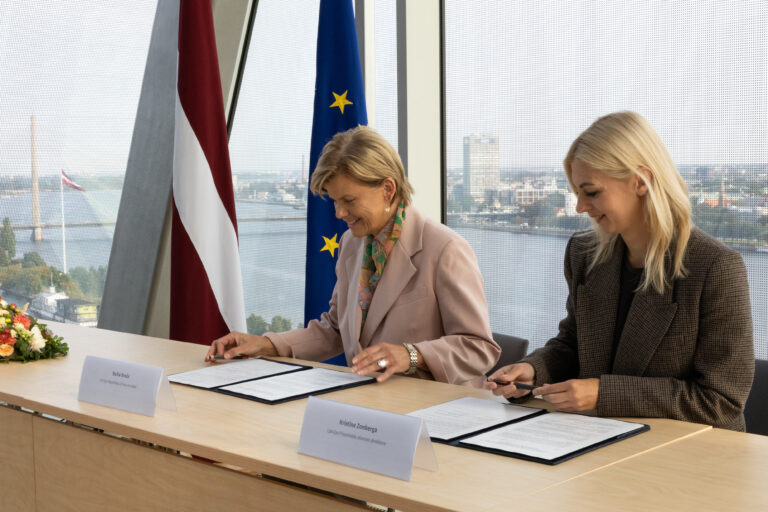
Ministry of Foreign Affairs and Civic Alliance – Latvia agree on civil society participation in Latvia’s presidency of the council of the European Union
Lasīt vairāk
News

News